
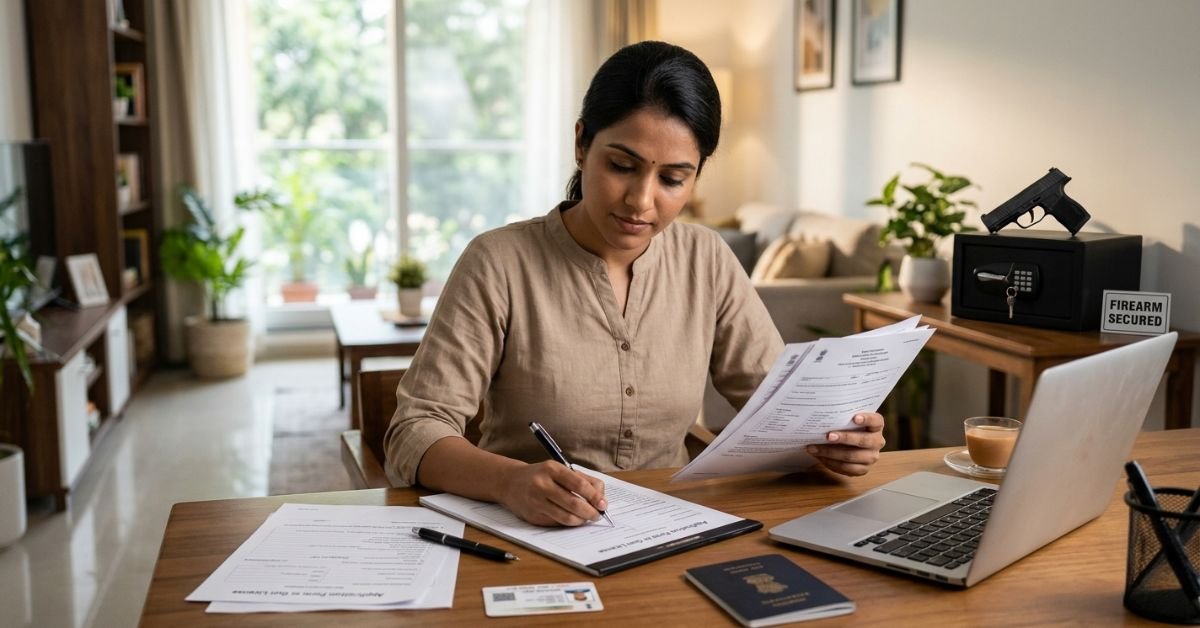
 Summary: Choosing whether to apply for a gun licence for safety in Maharashtra is a serious decision that depends on individual needs, legal eligibility, and responsibility. While a firearm can be considered in certain high-risk situations, it is not the right solution for everyone. This guide helps women understand when it makes sense, the legal process involved, and alternative safety measures. By taking an informed and balanced approach, you can choose the safest and most practical option for your situation.
Women’s safety is a serious concern for many households in Maharashtra, especially for those who travel late, live alone, run businesses, or handle high-value work. In that context, many people ask a direct question: should women apply for gun licence as a part of safety in Maharashtra? The honest answer is yes, in some situations it may be considered but it is not the right solution for every woman. Under the Arms Act, a person may not acquire, possess, or carry a firearm without a licence, and the application form specifically includes “self-protection” among the purposes an applicant may state.
The most important point is this: a gun licence is not a shortcut to safety. It is a legal responsibility that requires eligibility, verification, and a clear reason. In Maharashtra, the licensing process is tied to official forms, police verification, and authority review, so approval depends on the facts of each case.
Why some women consider a gun licence for safety
Some women consider a gun licence because they want a lawful means of protection in situations where they feel exposed, such as late-night travel, solo living, frequent cash handling, family business work, or repeated threats. The law does allow applicants to state self-protection as a reason for a licence, which is why the idea comes up often in safety discussions.
There is also a practical reason: many women do not want to rely only on chance, public vigilance, or delayed response in an emergency. For them, a gun licence feels like a serious, legal step toward preparedness. But preparedness is not the same as suitability. A firearm only makes sense if the applicant is willing to train, store it responsibly, and follow every legal condition attached to the licence.
When a gun licence may be worth considering
A gun licence may be worth considering when a woman has a genuine, defensible need and understands the responsibility involved. For example, this may be relevant for someone who regularly travels with significant cash, manages a business with security concerns, or faces documented threats. The law leaves room for the licensing authority to assess whether the applicant has a “good reason” and whether the facts justify a licence.
It may also make sense for women who are already safety-conscious, disciplined, and ready for the ongoing obligations that come with a licence. The legal process is not just about getting approval; it is about continuing to comply with the law after approval. That includes storage, transport, and safe use.
When it may not be the best option
A gun licence may not be the best option if the main concern is general fear rather than a real, specific risk. It may also be unsuitable for someone who is uncomfortable with firearms, not ready for training, or unable to maintain strict responsibility. The licensing authority can refuse a licence if it believes the applicant is unfit or if public safety concerns exist.
It is also important to remember that a gun licence does not remove danger by itself. It does not replace safe travel habits, strong locks, emergency contacts, self-defense training, secure routines, or workplace safety planning. For many women, those measures may offer better day-to-day protection than a firearm. That is why the decision should be practical, not emotional.
What the law says about gun licence purposes
The Arms Act requires that a person cannot acquire, possess, or carry a firearm without a licence issued under the law and rules. The application form also asks the applicant to clearly state the purpose for which the licence is required, including self-protection. In Maharashtra’s forms, “Self Protection / Sports / Property Protection” appears as the reason for sanction of the arm licence.
The licensing authority must call for a police report, conduct any inquiry it considers necessary, and then either grant or refuse the licence in writing. The law also states that the authority may refuse a licence if it believes the person is prohibited, unfit, or if public peace and public safety require refusal. So approval is never automatic.
How to apply for an arms licence in Maharashtra
In Maharashtra, arms-licence related services are handled through official state systems and police forms. The Maharashtra Police portal provides downloadable arms licence forms, and the state’s Aaple Sarkar service page lists “NOC Arms License Verification” with a 21-day time limit. The process involves application review, police verification, and status tracking.
A simple way to understand the process is this: submit the correct form, state the reason clearly, attach the required documents, and wait for verification and authority review. Because the process is governed by law, any missing detail, unclear purpose, or incomplete record can slow down the application or lead to refusal.
Documents, eligibility, and process
The legal form asks for the applicant’s details, the type of licence sought, the area where arms may be carried, the place where the arms will be kept, and the purpose of the licence. It also indicates that applicants should clearly mention the reason, such as self-protection. In practice, the licensing authority will look closely at identity details, address details, reason, and supporting documents.
The Arms Act also sets baseline restrictions. For example, a person under 21 cannot acquire, possess, or carry a firearm, subject to the statutory exceptions in the law. The authority can also refuse applicants who are prohibited by law, of unsound mind, or otherwise unfit. So eligibility is both legal and practical.
Gun Licence vs Other Personal Safety Options: What Should You Choose?
When thinking about safety, it’s important to understand that a gun licence is just one of several options available—and not always the most practical one for everyone.
A gun licence for safety offers a legally recognized form of protection under Indian law. However, it comes with a high level of responsibility. You are required to follow strict rules regarding storage, usage, and compliance. It also demands proper training, awareness, and mental readiness to handle a firearm responsibly.
On the other hand, other personal safety measures—such as self-defense training, situational awareness, secure travel planning, and digital safety tools—are easier to adopt in daily life. They do not involve complex legal procedures and are often more suitable for consistent, everyday protection.
Key Differences Explained:
- Legal Complexity:
A gun licence involves formal application, verification, and approval by authorities. Other safety methods do not require legal permissions. - Responsibility Level:
Firearm ownership comes with serious long-term responsibility. In comparison, general safety practices are easier to maintain regularly. - Training Requirement:
A gun licence requires proper handling knowledge and discipline. While other safety methods also benefit from training, they are generally less intensive. - Suitability:
A gun licence may be more suitable in cases involving specific or higher-risk situations. Other safety measures are often more practical for everyday use. - Comfort Level:
Not everyone is comfortable handling a firearm. Many women prefer safety strategies that feel more natural and less stressful to implement.
Instead of choosing one over the other, many safety-conscious individuals prefer a combined approach—using everyday safety practices along with exploring legal options like a gun licence if genuinely needed.
Important safety responsibilities after getting a licence
If a licence is granted, the responsibility does not end there. The law requires lawful possession and carrying, and the official forms and rules make it clear that the licence is tied to a specific purpose and area. That means the licence holder must follow the permitted scope carefully and keep the firearm secure.
This is why women applying for a gun licence should think beyond approval. They should think about safe storage, who may access the firearm, transport rules, routine compliance, and whether they are genuinely prepared for the seriousness of ownership. That mindset is what separates a responsible application from a risky one.
Alternatives and complementary safety measures
A gun licence should not be seen as the only safety option. Many women will benefit more from practical layers such as travel planning, emergency contacts, self-defense training, workplace safety steps, home security, digital safety, and awareness of local support systems. These measures may not replace a firearm in every situation, but they often reduce risk more consistently in daily life.
In other words, a gun licence may be one part of a safety strategy, but it should rarely be the whole strategy. That is especially true for women in Mumbai, Pune, Thane, Navi Mumbai, Nashik, and Nagpur, where everyday movement and public exposure vary widely by job, neighborhood, and timing.
Common myths about women and gun licences
Myth 1: A gun licence guarantees safety.
Reality: It does not. Safety depends on legality, training, judgment, and situational awareness. The law still requires authority review and may refuse a licence if the applicant is unfit or if public safety is a concern.
Myth 2: Self-protection is not a valid reason.
Reality: The application form specifically mentions self-protection as a purpose that may be stated. In Maharashtra’s form, “Self Protection / Sports / Property Protection” is listed as a reason for sanction.
Myth 3: Once the licence is approved, there are no further rules.
Reality: The law and licence conditions continue after approval. The licence holder must comply with the permitted use, possession, and carrying conditions.
Before applying, ask yourself these 5 questions
- Do I have a real safety need, not just a general fear?
- Am I comfortable with the legal responsibility of firearm ownership?
- Can I clearly explain self-protection as the reason if asked?
- Do I have the documents and background needed for verification?
- Would a broader safety plan also help me?
These questions matter because the licensing authority is not looking for a casual request. It is looking for a lawful, reasoned, and responsible application.
Practical examples
A woman who frequently travels late for work, manages cash collections, and has a documented safety concern may see a gun licence as one possible part of her protection plan. Another woman who mainly wants peace of mind for occasional travel may be better served by improved routine safety measures, escorted travel, and self-defense training. The right answer is not the same for everyone.
That is why the most helpful advice is not “yes” or “no” in isolation. It is: evaluate the risk, confirm the legal path, and decide whether the responsibility of a licence fits your life.
Making the Right Safety Choice: Awareness, Responsibility & Legal Clarity
Choosing whether to apply for a gun licence is not just about safety—it’s about responsibility, legal awareness, and personal comfort. For many women in Maharashtra, especially in big cities like Mumbai, Pune, and Nashik, the decision should come from a clear understanding of real risk, not just fear. A firearm can be a part of a safety strategy in certain situations, but it is never a one-size-fits-all solution. Practical safety measures, awareness, and the right guidance often play a bigger role in everyday protection.
If you are seriously considering this step, seeking expert assistance can make the entire process smoother and more reliable. Consulting a trusted gun license consultant in Nashik can help you understand eligibility, avoid common mistakes, and improve your chances of approval. At India Arms License, the focus is on guiding applicants with clarity, compliance, and confidence—so you make the right decision for your safety, backed by proper legal support.
FAQs
Can women apply for a gun licence in Maharashtra?
Yes, eligible applicants may apply under the arms-law process, and the form allows self-protection as a stated purpose. The final decision depends on verification and the licensing authority’s satisfaction.
Is gun licence approval guaranteed for self-protection?
No. Self-protection is a recognized purpose, but approval is not automatic. The authority must consider the application, police report, and any inquiry, and it may refuse for legal or public safety reasons.
What documents are usually needed?
The exact documents depend on the form and case, but the application requires full personal details, licence type, purpose, area, storage details, and supporting information. Maharashtra’s official portal provides arms-licence forms and verification services.
Does having a gun licence mean I can carry it anywhere?
No. The application form asks for the area within which the applicant wishes to carry arms, and Maharashtra’s form also mentions the sanctioned area as Mumbai or Maharashtra, depending on the case. Licence conditions matter.
How long does the process take in Maharashtra?
Processing time can vary, but Maharashtra’s Aaple Sarkar service page lists a 21-day time limit for NOC Arms License Verification, and the overall timeline depends on verification and authority review.