
How Factory Owners Can Apply for an Arms License in Mumbai
Summary : Factory owners in Mumbai often face genuine security concerns related to staff safety, cash handling, protection of high-value machinery, and safeguarding isolated industrial premises. In such situations, many explore the process of obtaining a gun license in Mumbai as a lawful security measure. This blog explains who is eligible to apply for an arms license, the documents required, the step-by-step approval process, what authorities evaluate during verification, common reasons applications get delayed or rejected, and practical tips to improve the chances of a smooth and successful application. Running a factory comes with responsibilities that go far beyond operations and production. Owners must also think about security, especially when the business handles expensive machinery, raw materials, finished goods, or cash transactions. In some cases, the risk level may be high enough for a factory owner to explore the legal route of applying for an arm license in Mumbai. An arms license is not something to be taken lightly. It is a regulated process with strict checks, document verification, and legal scrutiny. For factory owners, the key is to understand the procedure clearly, prepare the application carefully, and present a genuine reason that aligns with the law. This guide walks through the complete process in a practical, simple, and easy-to-follow way. Why Do Factory Owners Need An Arms License In Mumbai? Industrial properties often face security issues that are very different from ordinary commercial spaces. A factory may be located on the outskirts of a city, may operate late shifts, or may store goods that are costly and vulnerable to theft. In such situations, owners sometimes feel the need for additional personal protection within the legal framework. An gun license may be considered when the business environment involves genuine risk, repeated threats, or a clear need for lawful self-protection. The important point is that the application should be based on facts, not assumptions. Authorities usually expect the applicant to explain why the license is required and how the risk affects the factory owner personally or professionally. Who Can Apply For Gun License In Mumbai? Not every applicant is automatically eligible. The authorities review each case carefully to determine whether the person is fit to hold a gun license. Factory owners can apply if they satisfy the legal conditions and can show a valid reason. Basic Eligibility Criteria Some of the commonly considered conditions include: The applicant must be an Indian citizen The applicant should be of eligible age as per the law There should be no serious criminal background The applicant should be mentally sound and legally fit A genuine need must be shown The applicant should be able to provide valid identity and address proof Supporting documents related to the factory or business may be required The approval process is based on both personal background and the strength of the reason given in the application. A factory owner with a clean record, proper documents, and a clear explanation usually has a better chance of moving forward smoothly. What Documents Are Required To Apply For An Arms License In Mumbai? Before starting your application, it is important to understand the documents required for a new arms license in Mumbai. Keeping all the necessary paperwork ready in advance can help avoid delays and make the verification process smoother. Identity Proof Identity proof includes Aadhaar card, PAN card, passport, or other valid government-issued documents. These help authorities confirm the applicant’s identity, ensure authenticity, and maintain accurate records during the arms license verification and approval process. Address Proof Address proof is required to confirm the applicant’s permanent residential location. Documents like utility bills, Aadhaar, or rental agreements help authorities verify residence details and support smooth police verification during the gun license application process. Factory Ownership Or Business Proof Factory owners may need to provide documents such as: Factory registration certificate GST registration Udyam or MSME registration Partnership deed or company incorporation documents Ownership papers or lease agreement for the industrial premises Income And Financial Documents Income and financial documents such as income tax returns, bank statements, and audited reports may be required. These help authorities assess financial stability, business credibility, and overall background during the arms license evaluation process. Supporting Security Documents Supporting security documents include FIRs, threat reports, theft records, or incident evidence. These help demonstrate genuine risk or security concerns, strengthening the applicant’s justification for needing a gun license for personal or business protection. Photographs And Application Forms Photographs and application forms are essential submission requirements. Passport-size photos and accurately filled forms ensure proper identification, record maintenance, and smooth processing of the arms license application without delays or documentation errors. Step-By-Step Process To Apply For An Arms License In Mumbai The process should be handled carefully, because even a small mistake in the application can delay the outcome. Step 1: Collect The Required Documents Start by preparing all identity, address, factory, and supporting business documents. This is the stage where most errors can be avoided simply by checking the paperwork twice. Step 2: Submit The Application The application must be submitted through the proper authority with all necessary documents attached. The reason for the license should be explained clearly and honestly. Step 3: Undergo Police Verification Police verification is one of the most important parts of the process. Authorities may check the applicant’s background, residential details, character, and the overall credibility of the request. Step 4: Administrative Review Once the verification is complete, the application may move to the next stage of review. Officials assess whether the applicant has shown a real and lawful need. Step 5: Final Decision After all checks are completed, the authority decides whether to approve or reject the application. If approved, the applicant receives the license subject to the applicable rules and conditions. How Do Authorities Decide Whether To Approve An Arms License Application? A strong application is not just about documents. Authorities also look at the overall reason behind the request. For factory owners, the following factors may matter: Nature Of The Factory Operations
Police Verification for Arms License in Thane: Complete Guide
Summary: This guide covers the complete police verification process for an arms license in Thane, including step-by-step procedures, required documents, timelines, and what to expect during verification. It also explains common reasons for delays or rejection and provides practical tips to help you successfully clear this crucial stage. Police verification is one of the most critical stages in obtaining an arms license in Thane. While submitting the application is relatively straightforward, the verification process plays a decisive role in determining whether an applicant is eligible to legally possess a firearm. It acts as the final checkpoint where authorities assess your overall credibility and responsibility. A strong verification outcome can significantly speed up the approval process. This step is designed to ensure public safety by evaluating the applicant’s background, intent, and overall suitability. Many applications face delays or rejection due to incomplete documentation, unclear purpose, or unfavorable verification reports. Even small inconsistencies can raise concerns during the assessment. Understanding how this process works and preparing accordingly can greatly improve your chances of approval. What is Police Verification for an Arms License? Police verification is an official background check conducted by local law enforcement to assess whether an applicant is eligible to hold a firearm license. It involves: Verification of identity and residence Criminal background checks Assessment of personal conduct and reputation Evaluation of the applicant’s stated purpose This step ensures that firearms are only issued to individuals who meet legal and safety standards. Why is Police Verification Mandatory in Thane? Police verification is not just a procedural formality—it is a legal requirement designed to maintain public safety and responsible firearm ownership. Key reasons include: Criminal Background Screening: Ensures the applicant has no serious criminal history Identity Confirmation: Validates personal and residential details Public Safety Assurance: Prevents misuse of firearms Assessment of Genuine Need: Verifies whether the applicant has a valid reason Step-by-Step Police Verification Process for Arms License Step 1: Submission of Application The process begins with submitting an arms license application either online or offline. Applicants must provide accurate information and attach all required documents. Step 2: Document Scrutiny Once submitted, authorities review the application and documents to ensure everything is complete and accurate. Any mismatch or missing information can cause delays. Step 3: Local Police Verification The local police station conducts the primary verification. This includes visiting the applicant’s residence, interacting with the applicant, and making inquiries in the neighborhood to assess reputation and conduct. Step 4: Criminal Background Check Police authorities check for any criminal history, pending cases, or past involvement in unlawful activities. Even minor discrepancies can affect the outcome. Step 5: Submission of Verification Report After completing the verification, the police prepare a report and submit it to the licensing authority. This report includes observations and recommendations. Step 6: Final Decision Based on the police report and application details, the licensing authority makes the final decision. The application may be approved, rejected, or sent back for additional clarification. Documents Required During Police Verification Before attending police verification, make sure you have all the documents required for an arms license in Thane ready to avoid unnecessary delays in the approval process. Identity proof (such as Aadhaar Card and PAN Card) Address proof to confirm residence Passport-size photographs Income proof to establish financial stability Supporting documents justifying the need for a firearm Character certificate (if required based on profile) Medical certificate (if applicable depending on the applicant) Note: Document requirements may vary depending on the applicant’s category and latest government guidelines. What Happens During the Police Verification Visit? During the verification visit, police officers typically confirm the applicant’s residential address and verify whether the individual actually resides there. They may also speak with neighbors to gather feedback about the applicant’s behavior and reputation. Officers often assess the applicant’s occupation, family background, and overall lifestyle. In addition, they may ask questions about how the firearm will be used and stored safely. To prepare for this visit, applicants should keep all documents ready, ensure their address details are accurate, inform family members in advance, and be clear about their purpose for applying. Common Questions Asked During Police Verification Applicants should be prepared to answer questions such as: Why do you need an arms license? What is the intended use of the firearm? Have you ever been involved in any criminal case? Where will you store the firearm safely? What is your profession? Clear, honest, and consistent answers are essential. Common Reasons for Arms License Rejection Understanding rejection reasons can help applicants avoid mistakes. Criminal History: Any serious offense can lead to immediate rejection False Information: Misrepresentation results in disqualification Negative Police Report: Adverse findings during verification Lack of Genuine Need: Weak or unsupported purpose Security Concerns: Risk to public safety Your Next Step Toward a Hassle-Free Arms License Police verification is the backbone of the arms license approval process in Thane, ensuring that only responsible and law-abiding individuals are granted the right to possess firearms. From document verification to background checks, every step plays a crucial role in determining the final outcome. Being well-prepared, maintaining accurate records, and cooperating with authorities can significantly improve your chances of a smooth and successful approval. Navigating this process can be complex, which is why many applicants choose to consult an experienced arm and gun license consultant in Thane for proper guidance. For those looking for reliable support throughout the application and verificaarmtion stages, India Arms License offers end-to-end assistance to help ensure accuracy, compliance, and faster processing. Get expert guidance today and take the first step toward a hassle-free arms license approval process. Frequently Asked Questions (FAQs) How long does police verification for an arms license take in Maharashtra? Police verification usually takes 2 to 8 weeks, depending on location, document accuracy, and police workload. Delays can occur if additional inquiries or clarifications are required. What should I do if my police verification is delayed? You should follow up with your local police station or licensing authority. In many cases, delays happen due to
Can Petrol Pump Owners Get A Gun License In Pune? Complete Guide
Summary: Applying for an arms license in Maharashtra without understanding the legal eligibility criteria can lead to rejection, financial loss, and unnecessary delays. This guide explains who should not apply, the most common reasons applications are refused, and the practical steps you can take to improve your chances before submitting your application. Whether you’re applying for self-defense, sports shooting, or another valid reason, this article will help you make an informed decision before starting the licensing process. Every year, thousands of applicants across Maharashtra, from Mumbai and Pune to Nashik, Nagpur, and smaller districts, submit arms license applications only to face rejection months later. The fees are non-refundable in most cases, the paperwork is extensive, and a rejection on your record can make future applications harder. Before you invest your time, money, and hope into this process, it’s worth asking an uncomfortable but important question: should you even be applying right now? This guide is not meant to discourage genuinely eligible citizens from exercising their legal right to self-defense or sport shooting. Instead, it’s designed to help you honestly evaluate your situation against the Arms Act, 1959, and the Arms Rules, 2016, so you don’t waste effort on an application that’s likely to be turned down, and so you know exactly what to fix before trying again. Eligibility Overview: What the Law Actually Requires Under the Arms Act, 1959 and the Arms Rules, 2016, a licensing authority typically the District Magistrate or the Commissioner of Police in Maharashtra’s jurisdictions, evaluates every application on a combination of factors: citizenship, age, criminal history, mental and physical fitness, genuine need, and local law-and-order considerations. There is no automatic entitlement; even a fully “eligible” applicant can be refused if the authority isn’t satisfied that possession of a firearm is safe or necessary in their specific case. That discretionary element is exactly why so many well-intentioned applicants get rejected. They meet the basic checklist but overlook the practical and contextual factors that actually decide the outcome. Categories of People Likely to Be Rejected for a Gun License in Maharashtra 1. Applicants With a Criminal Record or Pending Cases Anyone with a conviction, or even a pending FIR or criminal proceeding, including cases that seem minor, like a scuffle or a cheque-bounce matter, is almost certain to face rejection. Police verification in Maharashtra is thorough, and local station records, court databases, and neighborhood inquiries are all cross-checked. Even cases where you were later acquitted can trigger additional scrutiny. 2. Applicants Below 21 Years of Age With limited exceptions for supervised sport-shooting categories recognized by the National Rifle Association of India, applicants must be at least 21. Minors and young adults without the relevant sporting affiliation should not apply for a standard license. 3. Applicants With Unresolved Mental Health or Chronic Health Concerns A medical fitness certificate confirming sound mental and physical health is mandatory. Individuals under treatment for psychiatric conditions, those with a history of substance dependence, or applicants who cannot pass a basic medical fitness assessment are routinely disqualified not as a punishment, but because firearm safety law prioritizes public safety above individual preference. 4. Applicants Without a Genuine, Demonstrable Need “I want a gun for protection” is not, by itself, sufficient justification. Maharashtra authorities expect specific, evidence-backed reasons a documented threat perception with police complaints, participation in a recognized shooting sport, agricultural crop protection in a verified rural context, or a professional requirement. Applicants who cannot substantiate their reason with paperwork are frequently turned away. 5. Applicants With a History of Public Disturbance or Local Complaints Character verification includes informal inquiries with neighbors, local police, and community members. A history of public disputes, domestic violence complaints, noise or nuisance complaints, or a generally volatile reputation in the community can weigh heavily against an application, even without a formal conviction. 6. Non-Citizens and Certain NRIs/OCI Cardholders Only Indian citizens are eligible for a standard civilian arms license. Overseas Citizens of India (OCI) cardholders, foreign nationals, and most NRIs without specific government authorization are not eligible and should not apply through the standard civilian route. 7. Applicants Residing in Sensitive or Restricted Zones Without Extra Justification Individuals residing in designated sensitive areas, near international borders, or in localities under heightened security concern may face additional restrictions or a higher bar for approval, even if they otherwise meet the basic criteria. 8. First-Time Applicants Applying for a Prohibited Bore (PB) Weapon PB weapons are reserved almost exclusively for defense, law enforcement, or individuals under a verified, serious, and ongoing threat to life. A first-time civilian applicant requesting a PB firearm without an extraordinary threat dossier is very unlikely to succeed and should instead explore the Non-Prohibited Bore (NPB) category. For a detailed explanation, read our guide on PB vs NPB Firearms in India: Simple Guide for Maharashtra Applicants before deciding which type of license to pursue. 9. Applicants With Incomplete or Inconsistent Documentation History This isn’t a “who” so much as a “how,” but it belongs here: applicants who have previously submitted inconsistent addresses, mismatched identity documents, or unexplained gaps in employment or residence history often get flagged during verification, leading to delays or outright rejection. Common Misconceptions About Arms License Eligibility “Owning property or being a taxpayer guarantees approval.” It doesn’t. Financial standing has no bearing on eligibility. “A license once denied can never be reapplied for.” Not true but reapplying without addressing the original rejection reason usually results in the same outcome. “Self-defense is always a valid reason.” Only when backed by credible, documented evidence of a specific threat. “Political or social connections speed up approval.” Licensing decisions are meant to be based strictly on legal criteria and verification outcomes, not influence. “An acquittal erases the impact of a past case.” Acquittals help, but the licensing authority may still consider the underlying conduct during character assessment. Frequent Mistakes That Lead to Rejection Applying immediately after a dispute or FIR without waiting for resolution. Submitting a vague “self-protection” justification without any supporting police complaint or
Why Jewellers and Gold Traders Often Apply for a Gun License in Nashik

Summary: Jewellers and gold traders in Nashik face unique security challenges due to the high-value nature of their business. An arms license can be an important legal safeguard for protecting valuable assets, employees, and business operations. In this guide, you’ll discover why many jewellery businesses apply for an arms license, who is eligible, the application process, key legal requirements, and practical tips to improve your chances of approval. If you run a jewellery shop, a bullion business, or a gold trading counter anywhere in Nashik, you already know something that most other retailers don’t have to think about every single day: your shop is a target. Not because of anything you did wrong, but simply because of what you sell. Gold, diamonds, and cash are compact, high-value, and easy to carry away, which makes jewellery establishments one of the most frequently targeted categories of business for armed robbery, chain-snatching, and organized theft in India. This is exactly why a growing number of jewellers, gold traders, diamond merchants, and bullion dealers across Nashik, Pune, Nashik, Nagpur, Thane, and other Maharashtra cities are formally applying for an arms license under the Arms Act, 1959. It isn’t about aggression or showmanship; it’s a calculated, legal step toward protecting life, stock, and business continuity. In this guide, we’ll break down exactly why jewellers seek arms licenses, what the law says, who is eligible, what documents are needed, the common mistakes applicants make, and what you should know before you begin the process. The Real Security Risks Jewellers Face in Nashik Before understanding the licensing process, it helps to understand why this conversation exists at all. Jewellery businesses face a unique combination of risk factors that most other trades don’t: High-value, low-volume inventory — A single showcase can hold crores of rupees worth of gold and diamonds, making the reward-to-effort ratio for criminals extremely high. Cash-heavy transactions — Many gold purchases and sales still involve significant cash movement, especially during festive and wedding seasons. Predictable peak hours — Wedding season, Akshaya Tritiya, Dhanteras, and Diwali create predictable spikes in stock and footfall, which criminals track just as closely as customers do. Standalone or family-run outlets — A large number of jewellery shops in Nashik’s smaller towns and city lanes are single-owner establishments with limited security infrastructure compared to large retail chains. Transit vulnerability — Owners and staff frequently transport gold, cash, or ornaments between the shop, bank, exhibitions, and karigars’ workshops, a window where robberies are especially common. News reports from across Nashik periodically highlight armed robberies and snatching incidents at jewellery stores, particularly in semi-urban and highway-adjacent areas where police response time can be longer. Even when such incidents don’t make headlines, jewellers themselves are acutely aware of the risk through industry associations, local trade bodies, and word-of-mouth within the community. Given this backdrop, many business owners choose to strengthen their in-house security posture, and a licensed firearm, held by the owner or an authorized, trained staff member, is one component of that broader security strategy. What the Law Says: Arms Act and Licensing in India Firearm possession in India is tightly regulated under the Arms Act, 1959 and the Arms Rules, 2016. No one not even a business owner with a genuine security need, can legally purchase, possess, or carry a firearm without a valid license issued by the competent licensing authority (typically the District Magistrate or Commissioner of Police, depending on jurisdiction). The law recognizes that certain categories of citizens face genuine, demonstrable threat to life or property, and it allows them to apply for a license under specific grounds, including “protection of life” and, in some cases, “protection of property,” subject to the discretion of the licensing authority and the facts presented in the application. Jewellers and gold traders often qualify under this framework because: Their occupation inherently exposes them to a higher risk of armed robbery or violent theft. They may hold or transport valuable stock regularly, which is a recognized risk factor. In some cases, applicants can demonstrate specific threats previous attempted robberies, threatening incidents, or being located in an area with a documented history of such crimes. That said, an arms license is never issued automatically. Every application is scrutinized individually, and the final decision rests entirely with the licensing authority based on the merits of the case, police verification, and background checks. Common Reasons Jewellers and Gold Traders Apply for Arms Licenses Here are the most frequent, legitimate reasons cited by jewellery business owners when applying: 1. Protection of High-Value Stock Gold, diamond, and precious stone inventory represents years of working capital. A single robbery can wipe out months or years of business earnings, insurance notwithstanding. 2. Personal Safety During Cash and Gold Transit Many owners personally carry gold or cash between the shop, the bank, exhibitions, or home often during odd hours, which increases vulnerability. 3. Deterrence Value The presence of a licensed firearm, even if never used, is widely believed by security consultants to act as a deterrent against opportunistic and even planned robberies. 4. History of Threats or Attempted Crime Business owners who have previously experienced a break-in, robbery attempt, or direct threat often have a stronger, more specific case for their application. 5. Location-Specific Risk Shops located in isolated markets, highway-facing showrooms, or areas with a documented history of jewellery theft may face heightened risk that supports the need for a license. 6. Family Business Legacy and Continuity For many multi-generational jewellery families, protecting the business is inseparable from protecting the family’s livelihood and safety across generations. 7. Supplementing, Not Replacing Physical Security Progressive business owners view an arms license as one layer in a broader security stack that includes CCTV, alarm systems, security guards, and safes not a standalone solution. Who Is Eligible? Basic Eligibility Criteria While the licensing authority evaluates every case individually, the general eligibility framework under the Arms Act includes: Applicant must be an Indian citizen, ordinarily aged 21 years or above (with some exceptions). Must have no
Why Pune Individuals Residing in Areas Prone to Danger from Wildlife Are Applying for Gun License
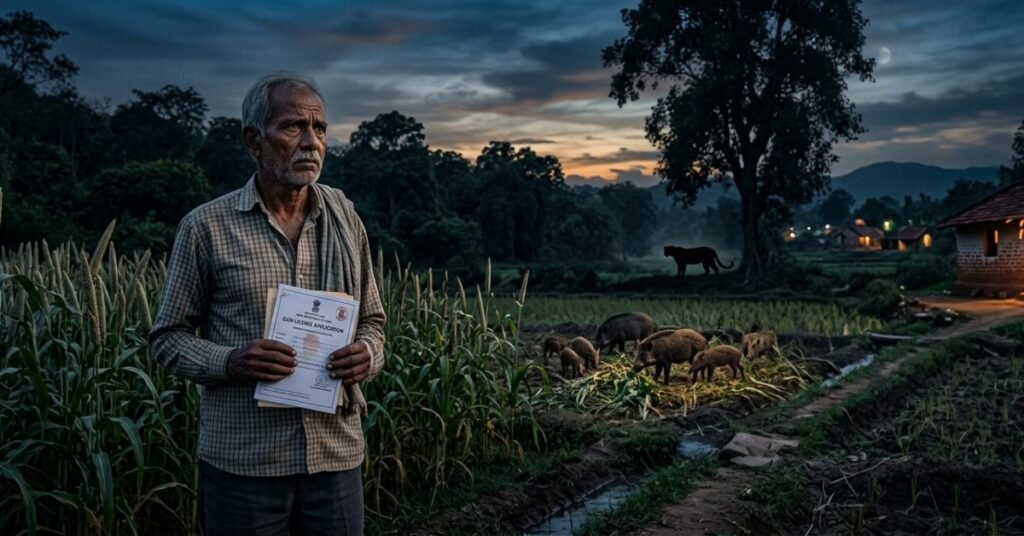
Summary: Living in wildlife-prone areas is no longer just a rural challenge it has become a serious safety concern for many families across India. Increasing encounters with wild animals near farms, villages, and forest zones are pushing individuals to seek legal self-protection through licensed firearms. This blog explains why more residents are applying for gun licenses, the legal process involved, and how responsible firearm ownership can provide security while staying within the framework of Indian law.It’s late at night in a quiet village near forest land in Maharashtra. A farmer hears rustling sounds outside his house. Within minutes, panic spreads wild boars have entered his farm again, destroying months of hard work. In some areas, it’s not just crops leopards have been spotted near homes, and elephant movements have damaged entire plantations. What was once an occasional fear has now become an unpredictable, recurring reality for thousands of rural families living close to forests. Across India, from the outskirts of Pune and Nagpur to the forest edges of Uttarakhand, Assam, and Karnataka, human-wildlife encounters are rising at an alarming rate. With livelihoods, safety, and peace of mind at stake, many residents are now exploring a gun license in India not out of aggression, but as a lawful step toward self-protection. In regions where help may be delayed and risks are immediate, the conversation is shifting from fear and helplessness to preparedness and legal protection. Why Demand for Gun License Is Rising in Wildlife Areas Increasing wildlife intrusion into villages and farms Rising crop destruction and livestock attacks Delayed emergency response in remote locations Growing need for lawful self-defense options Awareness about legal firearm ownership in India Why Wildlife Encounters Are Increasing in India 1. Deforestation and Habitat Loss Rapid urbanization and industrial development have reduced forest cover. Animals are forced to move closer to human settlements in search of food. 2. Expansion of Human Settlements Villages and towns are expanding into forest boundaries, increasing human-animal interaction zones. 3. Crop Attraction Crops such as sugarcane, maize, and fruits attract animals like wild boars and monkeys, leading to repeated farm invasions. 4. Climate Change Impact Irregular rainfall and food shortages in forests are pushing wildlife toward human habitats. 5. Rising Leopard and Wild Boar Incidents Regions like Maharashtra, Madhya Pradesh, and Himachal Pradesh have seen increased leopard sightings and wild boar attacks. Types of Wildlife Threats Faced by Residents Wild Boars Destroying Crops Farmers across Nashik, Pune rural, and Karnataka forest regions frequently report crop losses due to wild boars. These animals can wipe out entire fields overnight. Leopards Entering Villages Leopard sightings in Maharashtra and Uttarakhand have become more common, especially near forest-adjacent villages. Elephant Attacks In Assam and Kerala plantation belts, elephant movement causes large-scale destruction and poses life-threatening risks. Snake-Prone Areas Many rural regions face frequent snake encounters, especially during monsoon season. Hyena and Wolf Threats In parts of Madhya Pradesh and Rajasthan, these predators pose risks to livestock and sometimes humans. Monkey Menace Monkeys often destroy crops and create chaos in farms across Himachal Pradesh and urban-fringe villages. Night-Time Attacks Most wildlife movement happens at night, when residents are most vulnerable and help is far away. Why People Are Applying for Gun License in India Personal Safety: People living near forests face real threats. A gun license for self protection provides a lawful means of defense. Family Protection: Protecting children and elderly family members is a major concern in remote areas. Crop and Livestock Protection: Farmers rely on their land for survival. Repeated wildlife attacks can destroy livelihoods. Delayed Emergency Response: Police or forest authorities may take time to reach remote villages, making immediate self-defense crucial. Psychological Security: Having a licensed firearm provides a sense of safety and preparedness. Legal Preparedness: A wildlife protection gun license ensures individuals are legally protected while safeguarding themselves. Is Wildlife Threat a Valid Reason for Gun License in India? Under the Arms Act in India, firearm ownership is strictly regulated. A firearm license India is granted based on valid justification, and threat perception plays a crucial role. Key Considerations: Wildlife threat can be considered a supporting reason Final decision lies with the licensing authority Police verification is mandatory Strong documentation increases approval chances Approval is not automatic A well-documented case showing genuine risk from wild animals significantly strengthens the application. Documents That Strengthen Your Application To improve chances of approval, applicants should provide: FIR copies (if any wildlife-related incidents occurred) Wildlife or forest department reports Letters from local authorities or village heads Proof of agricultural land ownership Evidence of crop damage Identity and address proof Any documented history of threats Which Firearms Are Generally Allowed in India? In India, civilians are allowed to own firearms under strict legal categories. Key Points: Only specific categories of firearms are permitted Licensing is mandatory under Indian law Usage is strictly for lawful purposes Safe storage is a legal responsibility Misuse can lead to severe penalties Understanding firearm laws in India is essential before applying. Challenges Faced During Gun License Application Complex Documentation: Many applicants struggle with gathering proper documents. Police Verification Delays: Verification can take time, especially in rural areas. Eligibility Confusion: Many people are unaware of gun license eligibility India criteria. Improper Application Drafting: A poorly drafted application reduces approval chances. Lack of Legal Awareness: Understanding the legal process is often difficult without guidance. Why Professional Guidance Makes a Difference Applying for an arms license in India is not just about filling a form, it requires strategy, documentation, and legal clarity. A professional gun license consultant can help with: Accurate documentation preparation Eligibility assessment Application drafting Legal guidance End-to-end support With increasing complexities in the licensing process and strict legal requirements, expert guidance has become essential. India Arms License assist applicants in navigating the process smoothly and improving their chances of approval. Ensuring Safety Through Legal Protection and Responsible Firearm Ownership The growing interaction between humans and wildlife is no longer a distant concern it is a daily reality for many families living
Should Women Apply for Gun Licence as a Part of Safety in Mumbai?

Summary: Choosing whether to apply for a gun licence for safety in Mumbai is a serious decision that depends on individual needs, legal eligibility, and responsibility. While a firearm can be considered in certain high-risk situations, it is not the right solution for everyone. This guide helps women understand when it makes sense, the legal process involved, and alternative safety measures. By taking an informed and balanced approach, you can choose the safest and most practical option for your situation. Women’s safety is a serious concern for many households in Mumbai, especially for those who travel late, live alone, run businesses, or handle high-value work. In that context, many people ask a direct question: should women apply for gun licence as a part of safety in Mumbai? The honest answer is yes, in some situations it may be considered but it is not the right solution for every woman. Under the Arms Act, a person may not acquire, possess, or carry a firearm without a licence, and the application form specifically includes “self-protection” among the purposes an applicant may state. The most important point is this: a gun licence is not a shortcut to safety. It is a legal responsibility that requires eligibility, verification, and a clear reason. In Mumbai, the licensing process is tied to official forms, police verification, and authority review, so approval depends on the facts of each case. Why some women consider a gun licence for safety Some women consider a gun licence because they want a lawful means of protection in situations where they feel exposed, such as late-night travel, solo living, frequent cash handling, family business work, or repeated threats. The law does allow applicants to state self-protection as a reason for a licence, which is why the idea comes up often in safety discussions. There is also a practical reason: many women do not want to rely only on chance, public vigilance, or delayed response in an emergency. For them, a gun licence feels like a serious, legal step toward preparedness. But preparedness is not the same as suitability. A firearm only makes sense if the applicant is willing to train, store it responsibly, and follow every legal condition attached to the licence. When a gun licence may be worth considering A gun licence may be worth considering when a woman has a genuine, defensible need and understands the responsibility involved. For example, this may be relevant for someone who regularly travels with significant cash, manages a business with security concerns, or faces documented threats. The law leaves room for the licensing authority to assess whether the applicant has a “good reason” and whether the facts justify a licence. It may also make sense for women who are already safety-conscious, disciplined, and ready for the ongoing obligations that come with a licence. The legal process is not just about getting approval; it is about continuing to comply with the law after approval. That includes storage, transport, and safe use. When it may not be the best option A gun licence may not be the best option if the main concern is general fear rather than a real, specific risk. It may also be unsuitable for someone who is uncomfortable with firearms, not ready for training, or unable to maintain strict responsibility. The licensing authority can refuse a licence if it believes the applicant is unfit or if public safety concerns exist. It is also important to remember that a gun licence does not remove danger by itself. It does not replace safe travel habits, strong locks, emergency contacts, self-defense training, secure routines, or workplace safety planning. For many women, those measures may offer better day-to-day protection than a firearm. That is why the decision should be practical, not emotional. What the law says about gun licence purposes The Arms Act requires that a person cannot acquire, possess, or carry a firearm without a licence issued under the law and rules. The application form also asks the applicant to clearly state the purpose for which the licence is required, including self-protection. In Mumbai’s forms, “Self Protection / Sports / Property Protection” appears as the reason for sanction of the arm licence. The licensing authority must call for a police report, conduct any inquiry it considers necessary, and then either grant or refuse the licence in writing. The law also states that the authority may refuse a licence if it believes the person is prohibited, unfit, or if public peace and public safety require refusal. So approval is never automatic. How to apply for an arms licence in Mumbai In Mumbai, arms-licence related services are handled through official state systems and police forms. The Mumbai Police portal provides downloadable arms licence forms, and the state’s Aaple Sarkar service page lists “NOC Arms License Verification” with a 21-day time limit. The process involves application review, police verification, and status tracking. A simple way to understand the process is this: submit the correct form, state the reason clearly, attach the required documents, and wait for verification and authority review. Because the process is governed by law, any missing detail, unclear purpose, or incomplete record can slow down the application or lead to refusal. Documents, eligibility, and process The legal form asks for the applicant’s details, the type of licence sought, the area where arms may be carried, the place where the arms will be kept, and the purpose of the licence. It also indicates that applicants should clearly mention the reason, such as self-protection. In practice, the licensing authority will look closely at identity details, address details, reason, and supporting documents. The Arms Act also sets baseline restrictions. For example, a person under 21 cannot acquire, possess, or carry a firearm, subject to the statutory exceptions in the law. The authority can also refuse applicants who are prohibited by law, of unsound mind, or otherwise unfit. So eligibility is both legal and practical. Gun Licence vs Other Personal Safety Options: What Should You Choose? When thinking
Returning NRI Who Owned Weapons Abroad Are Now Applying For Gun License In Mumbai
Summary: Returning NRIs who owned firearms abroad often assume the process of getting a gun license in Mumbai will be straightforward but the reality is very different. Indian laws focus on eligibility, documentation, and verification rather than past ownership. This blog breaks down the complete process, key requirements, and common challenges to help you avoid delays. If you’re planning to apply, understanding the right approach from the start can significantly improve your chances of approval. When returning NRIs settle back in Mumbai after years abroad, many assume that prior legal firearm ownership will simplify getting a gun license here. In reality, the Indian licensing system follows a completely different framework one that prioritizes eligibility, documented need, police verification, and the discretion of the licensing authority over past ownership history. This creates a gap between expectation and reality, leaving many applicants unsure about where they stand or how to proceed correctly. This blog is designed to bridge that gap with a clear, compliance-first approach. It breaks down what returning NRIs, OCI holders, and families dealing with inherited firearms truly need to know from eligibility and documentation to common mistakes and practical next steps. Whether you’re exploring your options or preparing to apply, this guide will help you understand the process with clarity and confidence while avoiding costly delays or rejections. Why Returning NRIs Are Asking About Gun Licenses in Mumbai Many returning NRIs search for gun license information after settling back in Mumbai for a few practical reasons. Some want personal and family security. Others are entering business, real estate, or high-risk professions where they feel a licensed firearm may be relevant. In many families, the issue comes up because of inheritance, legacy property, or older firearms that were once used legally abroad. There is also a common misconception that a prior foreign license helps in Mumbai, which is rarely the case. The search intent behind this topic is usually not just legal. It is emotional, practical, and urgent. People want to know what is possible, what is allowed, what documents are needed, and how to avoid rejection. Can a Returning NRI Apply for a Gun License in Mumbai? Short answer: yes, in some situations, but the outcome depends on eligibility under Indian law. A returning NRI who is an Indian citizen can generally apply through the normal Indian licensing route once they establish residence in Mumbai and meet the required criteria. However, the licensing authority will still examine the application on its own merits. The key point is this: previous ownership abroad is background information, not automatic approval. For the authority, the main questions are: Is the applicant legally eligible? Is the application complete? Is the reason for the firearm credible? Does police verification support the claim? Are the documents consistent and verifiable? If the answer to any of these is weak, the case can be delayed or refused. NRI vs OCI vs Indian Citizen: What Changes in the Licensing Route? Important distinction: this is one of the most misunderstood parts of the process. Returning NRIs, OCI holders, and Indian residents may not be treated the same way. Their route can differ depending on citizenship, residence, and the purpose of the application. Returning NRI A returning NRI who is an Indian citizen may apply as a resident once settled in Mumbai. The process is still document-heavy and verification-based. OCI Applicant OCI applicants usually face stricter scrutiny. The exact position can depend on current rules, local authority practice, and the nature of the request. Many applicants in this category need careful case evaluation before filing. Indian Resident Applicant An Indian resident citizen generally follows the standard route, but approval is still based on necessity, verification, and local authority satisfaction. The better your status is documented, the smoother the process becomes. Confusion about category often causes application delays more than anything else. What Official Factors Matter Most in Approval? Summary: the authority wants clarity, credibility, and compliance. A gun license application is not assessed only on identity. The authority usually looks at several practical factors before deciding. These often include: The applicant’s legal status and address Background verification and police report The stated reason for needing a firearm Any history of criminal, civil, or security-related concerns Local conditions and jurisdiction-specific rules Completeness of the application and supporting documents A strong application does not try to sound dramatic. It sounds organized, honest, and well-supported. Documents Usually Required for an Application Tip: incomplete documents are one of the most common reasons applications get stuck. While requirements can vary by state and authority, a returning NRI usually needs a set of basic documents such as: Proof of identity Proof of Indian address Proof of citizenship or residency status Passport and immigration-related records Recent photographs Reason statement or justification for the firearm Income, business, or occupation proof if relevant Supporting documents for security concern, property, or inheritance cases Any medical or fitness-related documents required by the authority If any document contains a mismatch in name, address, or timeline, the application can slow down quickly. Step-by-Step Process to Apply for a Gun License in Mumbai Overview: follow the process in order, and do not skip steps. 1) Check eligibility First, confirm whether the applicant is eligible under current Indian rules. This matters especially for returning NRIs and OCI cases. 2) Prepare documents Collect all identity, residence, and supporting documents before filing. 3) Fill the application accurately The application should match all supporting records. Even minor mismatches can cause delays. 4) Submit the application through the official route Depending on the state and licensing system, the application is filed through the relevant official channel. typically via the NDAL-ALIS (National Database of Arms Licenses) portal. Applicants should ensure all details are correctly entered and documents are properly uploaded to avoid delays in processing. 5) Police verification This is one of the most important stages. The local verification report often influences the final decision. 6) Authority review The licensing authority reviews the application, reason, and verification inputs. 7) Decision
How Factory Owners Can Apply for an Arms License in Nagpur
Summary : Factory owners in Nagpur often face genuine security concerns related to staff safety, cash handling, protection of high-value machinery, and safeguarding isolated industrial premises. In such situations, many explore the process of obtaining a gun license in Nagpur as a lawful security measure. This blog explains who is eligible to apply for an arms license, the documents required, the step-by-step approval process, what authorities evaluate during verification, common reasons applications get delayed or rejected, and practical tips to improve the chances of a smooth and successful application. Running a factory comes with responsibilities that go far beyond operations and production. Owners must also think about security, especially when the business handles expensive machinery, raw materials, finished goods, or cash transactions. In some cases, the risk level may be high enough for a factory owner to explore the legal route of applying for an arm license in Nagpur. An arms license is not something to be taken lightly. It is a regulated process with strict checks, document verification, and legal scrutiny. For factory owners, the key is to understand the procedure clearly, prepare the application carefully, and present a genuine reason that aligns with the law. This guide walks through the complete process in a practical, simple, and easy-to-follow way. Why Do Factory Owners Need An Arms License In Nagpur? Industrial properties often face security issues that are very different from ordinary commercial spaces. A factory may be located on the outskirts of a city, may operate late shifts, or may store goods that are costly and vulnerable to theft. In such situations, owners sometimes feel the need for additional personal protection within the legal framework. An gun license may be considered when the business environment involves genuine risk, repeated threats, or a clear need for lawful self-protection. The important point is that the application should be based on facts, not assumptions. Authorities usually expect the applicant to explain why the license is required and how the risk affects the factory owner personally or professionally. Who Can Apply For Gun License In Nagpur? Not every applicant is automatically eligible. The authorities review each case carefully to determine whether the person is fit to hold a gun license. Factory owners can apply if they satisfy the legal conditions and can show a valid reason. Basic Eligibility Criteria Some of the commonly considered conditions include: The applicant must be an Indian citizen The applicant should be of eligible age as per the law There should be no serious criminal background The applicant should be mentally sound and legally fit A genuine need must be shown The applicant should be able to provide valid identity and address proof Supporting documents related to the factory or business may be required The approval process is based on both personal background and the strength of the reason given in the application. A factory owner with a clean record, proper documents, and a clear explanation usually has a better chance of moving forward smoothly. What Documents Are Required To Apply For An Arms License In Nagpur? Before starting your application, it is important to understand the documents required for a new arms license in Nagpur. Keeping all the necessary paperwork ready in advance can help avoid delays and make the verification process smoother. Identity Proof Identity proof includes Aadhaar card, PAN card, passport, or other valid government-issued documents. These help authorities confirm the applicant’s identity, ensure authenticity, and maintain accurate records during the arms license verification and approval process. Address Proof Address proof is required to confirm the applicant’s permanent residential location. Documents like utility bills, Aadhaar, or rental agreements help authorities verify residence details and support smooth police verification during the gun license application process. Factory Ownership Or Business Proof Factory owners may need to provide documents such as: Factory registration certificate GST registration Udyam or MSME registration Partnership deed or company incorporation documents Ownership papers or lease agreement for the industrial premises Income And Financial Documents Income and financial documents such as income tax returns, bank statements, and audited reports may be required. These help authorities assess financial stability, business credibility, and overall background during the arms license evaluation process. Supporting Security Documents Supporting security documents include FIRs, threat reports, theft records, or incident evidence. These help demonstrate genuine risk or security concerns, strengthening the applicant’s justification for needing a gun license for personal or business protection. Photographs And Application Forms Photographs and application forms are essential submission requirements. Passport-size photos and accurately filled forms ensure proper identification, record maintenance, and smooth processing of the arms license application without delays or documentation errors. Step-By-Step Process To Apply For An Arms License In Nagpur The process should be handled carefully, because even a small mistake in the application can delay the outcome. Step 1: Collect The Required Documents Start by preparing all identity, address, factory, and supporting business documents. This is the stage where most errors can be avoided simply by checking the paperwork twice. Step 2: Submit The Application The application must be submitted through the proper authority with all necessary documents attached. The reason for the license should be explained clearly and honestly. Step 3: Undergo Police Verification Police verification is one of the most important parts of the process. Authorities may check the applicant’s background, residential details, character, and the overall credibility of the request. Step 4: Administrative Review Once the verification is complete, the application may move to the next stage of review. Officials assess whether the applicant has shown a real and lawful need. Step 5: Final Decision After all checks are completed, the authority decides whether to approve or reject the application. If approved, the applicant receives the license subject to the applicable rules and conditions. How Do Authorities Decide Whether To Approve An Arms License Application? A strong application is not just about documents. Authorities also look at the overall reason behind the request. For factory owners, the following factors may matter: Nature Of The Factory Operations
Who Should Not Apply For An Arms License In Nashik?
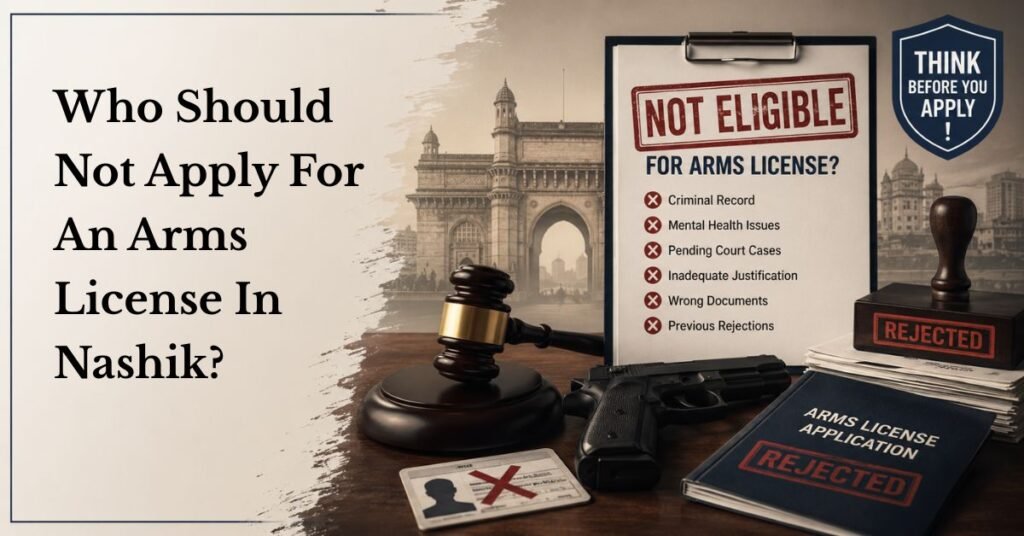
Summary: Applying for an arms license in Nashik without understanding the legal eligibility criteria can lead to rejection, financial loss, and unnecessary delays. This guide explains who should not apply, the most common reasons applications are refused, and the practical steps you can take to improve your chances before submitting your application. Whether you’re applying for self-defense, sports shooting, or another valid reason, this article will help you make an informed decision before starting the licensing process. Every year, thousands of applicants across Maharashtra, from Mumbai and Pune to Nashik, Nagpur, and smaller districts, submit arms license applications only to face rejection months later. The fees are non-refundable in most cases, the paperwork is extensive, and a rejection on your record can make future applications harder. Before you invest your time, money, and hope into this process, it’s worth asking an uncomfortable but important question: should you even be applying right now? This guide is not meant to discourage genuinely eligible citizens from exercising their legal right to self-defense or sport shooting. Instead, it’s designed to help you honestly evaluate your situation against the Arms Act, 1959, and the Arms Rules, 2016, so you don’t waste effort on an application that’s likely to be turned down, and so you know exactly what to fix before trying again. Eligibility Overview: What the Law Actually Requires Under the Arms Act, 1959 and the Arms Rules, 2016, a licensing authority typically the District Magistrate or the Commissioner of Police in Nashik’s jurisdictions, evaluates every application on a combination of factors: citizenship, age, criminal history, mental and physical fitness, genuine need, and local law-and-order considerations. There is no automatic entitlement; even a fully “eligible” applicant can be refused if the authority isn’t satisfied that possession of a firearm is safe or necessary in their specific case. That discretionary element is exactly why so many well-intentioned applicants get rejected. They meet the basic checklist but overlook the practical and contextual factors that actually decide the outcome. Categories of People Likely to Be Rejected for a Gun License in Nashik 1. Applicants With a Criminal Record or Pending Cases Anyone with a conviction, or even a pending FIR or criminal proceeding, including cases that seem minor, like a scuffle or a cheque-bounce matter, is almost certain to face rejection. Police verification in Nashik is thorough, and local station records, court databases, and neighborhood inquiries are all cross-checked. Even cases where you were later acquitted can trigger additional scrutiny. 2. Applicants Below 21 Years of Age With limited exceptions for supervised sport-shooting categories recognized by the National Rifle Association of India, applicants must be at least 21. Minors and young adults without the relevant sporting affiliation should not apply for a standard license. 3. Applicants With Unresolved Mental Health or Chronic Health Concerns A medical fitness certificate confirming sound mental and physical health is mandatory. Individuals under treatment for psychiatric conditions, those with a history of substance dependence, or applicants who cannot pass a basic medical fitness assessment are routinely disqualified not as a punishment, but because firearm safety law prioritizes public safety above individual preference. 4. Applicants Without a Genuine, Demonstrable Need “I want a gun for protection” is not, by itself, sufficient justification. Nashik authorities expect specific, evidence-backed reasons a documented threat perception with police complaints, participation in a recognized shooting sport, agricultural crop protection in a verified rural context, or a professional requirement. Applicants who cannot substantiate their reason with paperwork are frequently turned away. 5. Applicants With a History of Public Disturbance or Local Complaints Character verification includes informal inquiries with neighbors, local police, and community members. A history of public disputes, domestic violence complaints, noise or nuisance complaints, or a generally volatile reputation in the community can weigh heavily against an application, even without a formal conviction. 6. Non-Citizens and Certain NRIs/OCI Cardholders Only Indian citizens are eligible for a standard civilian arms license. Overseas Citizens of India (OCI) cardholders, foreign nationals, and most NRIs without specific government authorization are not eligible and should not apply through the standard civilian route. 7. Applicants Residing in Sensitive or Restricted Zones Without Extra Justification Individuals residing in designated sensitive areas, near international borders, or in localities under heightened security concern may face additional restrictions or a higher bar for approval, even if they otherwise meet the basic criteria. 8. First-Time Applicants Applying for a Prohibited Bore (PB) Weapon PB weapons are reserved almost exclusively for defense, law enforcement, or individuals under a verified, serious, and ongoing threat to life. A first-time civilian applicant requesting a PB firearm without an extraordinary threat dossier is very unlikely to succeed and should instead explore the Non-Prohibited Bore (NPB) category. For a detailed explanation, read our guide on PB vs NPB Firearms in India: Simple Guide for Nashik Applicants before deciding which type of license to pursue. 9. Applicants With Incomplete or Inconsistent Documentation History This isn’t a “who” so much as a “how,” but it belongs here: applicants who have previously submitted inconsistent addresses, mismatched identity documents, or unexplained gaps in employment or residence history often get flagged during verification, leading to delays or outright rejection. Common Misconceptions About Arms License Eligibility “Owning property or being a taxpayer guarantees approval.” It doesn’t. Financial standing has no bearing on eligibility. “A license once denied can never be reapplied for.” Not true but reapplying without addressing the original rejection reason usually results in the same outcome. “Self-defense is always a valid reason.” Only when backed by credible, documented evidence of a specific threat. “Political or social connections speed up approval.” Licensing decisions are meant to be based strictly on legal criteria and verification outcomes, not influence. “An acquittal erases the impact of a past case.” Acquittals help, but the licensing authority may still consider the underlying conduct during character assessment. Frequent Mistakes That Lead to Rejection Applying immediately after a dispute or FIR without waiting for resolution. Submitting a vague “self-protection” justification without any supporting police complaint or
Do You Actually Qualify for an Arms License in Pune? Take This Eligibility Checklist
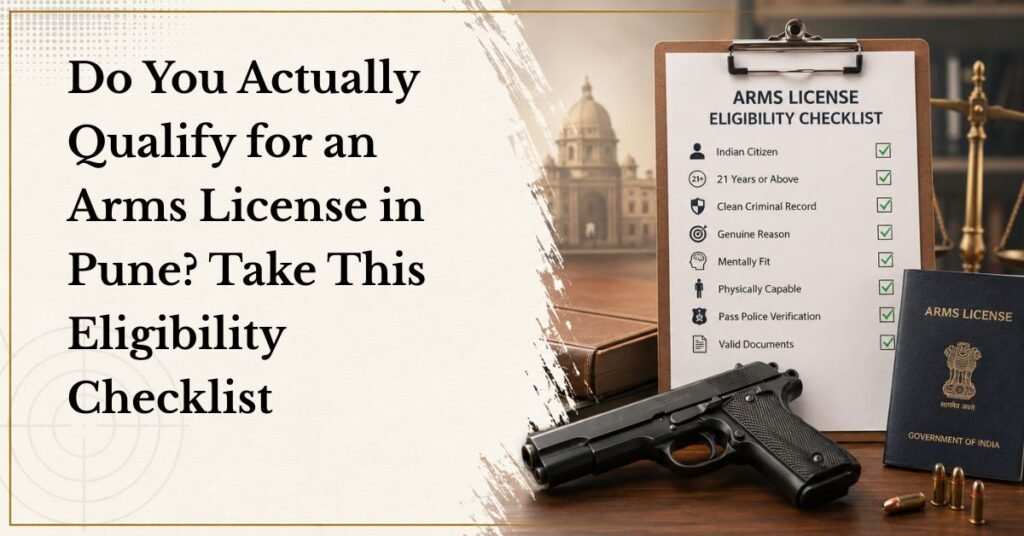
Quick Summary: Getting an arms license in Pune isn’t about luck or connections; it’s about meeting clear legal, documentary, and character-based benchmarks under the Arms Act, 1959. This guide gives you a 20-point self-assessment checklist, busts common eligibility myths, and shows you exactly what to fix if you fall short so you apply with confidence instead of guesswork. If you have ever searched for “arms license eligibility in Pune” and come away more confused than when you started, you are not alone. Between conflicting information on forums, outdated blog posts, and well-meaning but inaccurate advice from acquaintances, most first-time applicants have no real idea whether they even qualify before they walk into a District Magistrate’s or Police Commissioner’s office. This guide fixes that. Below is a practical, honest, self-assessment checklist based on the framework of the Arms Act, 1959 and the Arms Rules, 2016, written in plain language, so you can evaluate your own eligibility before you invest time in the application process. Who Is Legally Eligible for an Arms License in India? Under Indian law, an arms license is not a right it is a privilege granted at the discretion of the Licensing Authority (typically the District Magistrate or Deputy Commissioner of Police, depending on your jurisdiction) after verifying that the applicant meets specific legal and procedural conditions. Broadly, to even be considered, an applicant must satisfy these baseline requirements: Age: The applicant must generally be 21 years or older. Exceptions exist in limited circumstances, but minors cannot independently hold a license. Sound mind: The applicant must not have been declared of unsound mind by a competent court or medical authority. No disqualifying criminal history: The applicant must not have been convicted of an offence involving violence, moral turpitude, or under laws such as the Arms Act itself, NDPS Act, or similar statutes. No pending criminal proceedings of a serious nature that would indicate a risk if a weapon were granted. Genuine and justifiable need: This is the single biggest filter. The applicant must demonstrate a real, specific reason for self-defence due to a credible threat, business necessity (jewellers, cash handlers), agricultural protection (crop or cattle protection from wildlife or theft), or professional requirement (security personnel, sports shooters). Not a threat to public peace or security: The Licensing Authority evaluates whether granting a license could endanger public safety. Compliance with local police verification: A clean report from local police, including character and antecedent verification, is mandatory. Meeting these conditions does not guarantee approval, but failing even one of them makes rejection almost certain. The Complete Self-Assessment Eligibility Checklist Answer each question honestly with a Yes or No. This is the same type of scrutiny a Licensing Authority and a verifying police officer will apply to your file. Section A: Basic Legal Eligibility Are you at least 21 years of age? (Yes/No) Are you an Indian citizen? (Yes/No) Do you have a permanent or long-term residential address within Pune, with valid proof? (Yes/No) Have you never been declared of unsound mind by a court or certified medical authority? (Yes/No) Do you have no conviction for any criminal offence involving violence, moral turpitude, or arms-related violations? (Yes/No) Do you have no ongoing serious criminal case, FIR, or preventive action registered against you? (Yes/No) Have you never had a previous arms license suspended, cancelled, or revoked due to misconduct? (Yes/No) Section B: Genuine Need Assessment Can you clearly explain, in writing, why you need a firearm (self-defence, business, agriculture, sport, or profession)? (Yes/No) If claiming a threat to life, do you have supporting evidence such as a police complaint, FIR, or documented threat? (Yes/No) If applying as a business owner, jeweller, or cash handler, can you show proof of business ownership, turnover, or cash-handling volume? (Yes/No) If applying as a farmer, do you own or lease agricultural land, and can you demonstrate wildlife or security-related risk to crops/livestock? (Yes/No) If applying as a security professional, do you hold a valid employment or contractual document from a recognised security agency or organisation? (Yes/No) Section C: Character and Community Standing Are you free from habitual alcohol or substance-related complaints on police record? (Yes/No) Have you maintained a stable residence (not frequently shifting without documentation) for a reasonable period? (Yes/No) Are you currently employed, self-employed, or able to demonstrate a legitimate source of income? (Yes/No) Do you have at least two credible references/witnesses who can vouch for your character during police verification? (Yes/No) Section D: Procedural Readiness Do you have access to your identity and address proof documents (Aadhaar, PAN, voter ID, etc.)? (Yes/No) Are you willing and prepared to undergo police verification, including a home visit? (Yes/No) Are you free of any pending litigation that could affect your character certificate? (Yes/No) Are you prepared to specify the type of weapon and its intended use accurately in your application? (Yes/No) How to interpret your answers: If you answered “No” to any question in Section A, you are currently ineligible and must resolve that issue before applying. A “No” in Sections B, C, or D does not always mean disqualification, but it significantly weakens your application and should be addressed first. Common Reasons Applicants Become Ineligible Understanding why applications fail is often more useful than knowing the rules themselves. The most frequent disqualifying or weakening factors include: Vague justification. Writing “for self-protection” without specific incidents, threats, or documentation is one of the most common reasons for rejection. Undisclosed criminal history, even for minor or old offences, discovered during police verification. Frequent change of address without updated documentation, which raises verification red flags. Unverifiable business claims for example, claiming to be a jeweller or cash handler without GST registration, shop licenses, or financial records. Poor local reputation or unresolved disputes, including property or family disputes that surface during the neighbourhood verification process. Incomplete or inconsistent documentation across application forms, affidavits, and supporting proofs. Applying for the wrong category of license, for instance, applying for a “self-defence” license when the actual need is business-related, which requires different